Voltpile solid state
sustainability
A state-of-the-art solution to the unsustainable battery problem

Lithium-ion batteries contain toxic and flammable liquids that are non-recyclable and harmful to the planet. They also use materials that require huge amounts of energy to extract, and are often transported around the world. This results in high carbon emissions.
The production process for lithium-ion batteries is complex and consumes large amounts of energy. It also releases toxic volatile gases that often end up in the atmosphere. This significantly contributes to global warming.
Current lithium-ion battery technology has low energy density and a short lifespan. That means their performance is low. This results in more batteries going to landfill. To make matters worse, lithium-ion batteries are not maintainable, so once they stop working they are usually discarded.
Voltpile batteries feature adaptive anode and cathode agnostic technology so they can be manufactured with a range of different materials. This lowers extraction costs, reduces emissions and eliminates the need for complex transportation networks.
Our groundbreaking battery technology uses solid state materials that are non-toxic and can be recycled instead of the environment-damaging liquids currently used in traditional batteries.
Our bipolar architecture battery design is a leader in energy density. By providing more power per charge we extended the battery lifespan to significantly reduce waste generation.
We designed a more reliable battery that can be maintained to extend its lifespan even further. And when it does finally reach its end of life, it can be recycled.
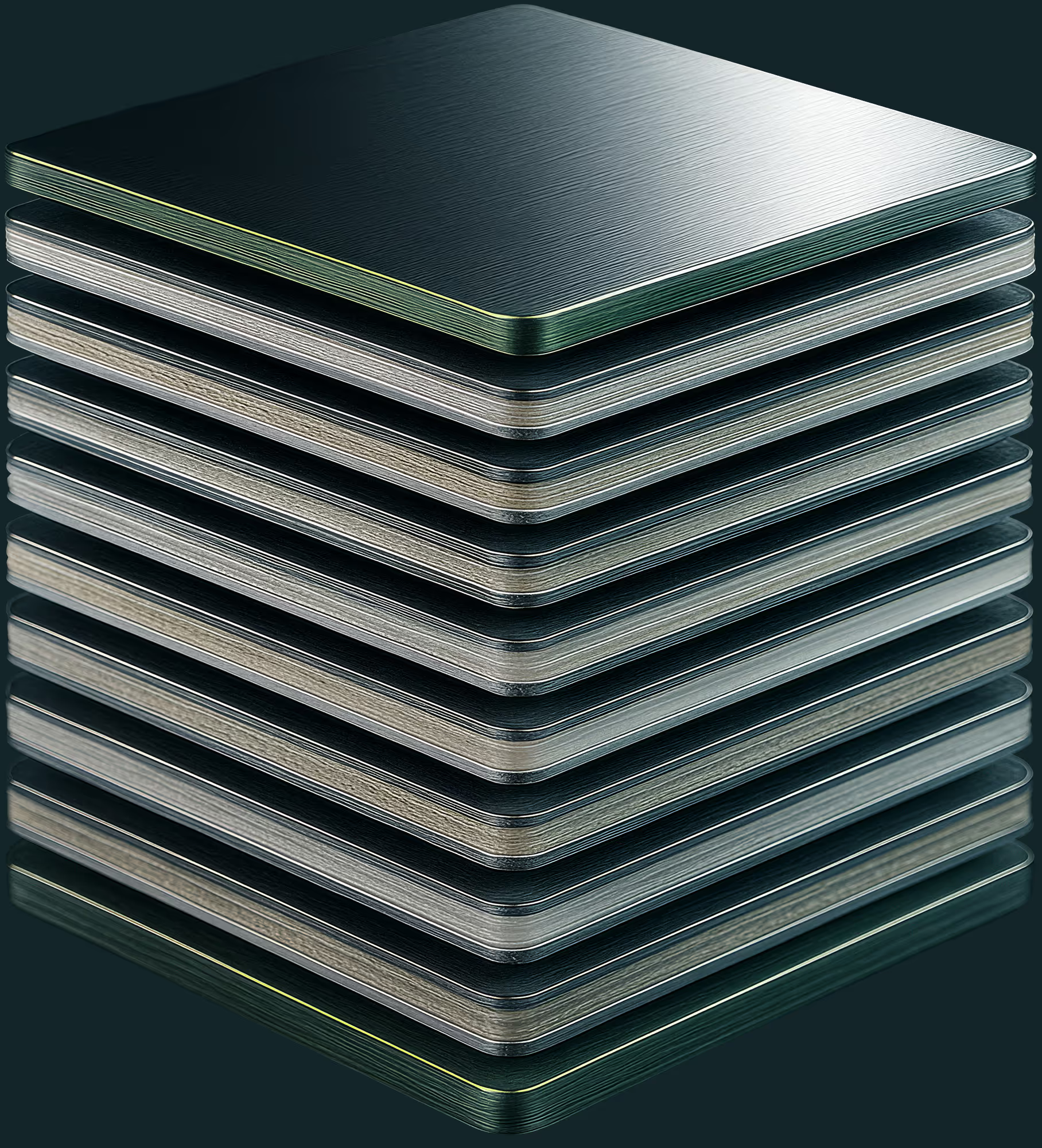
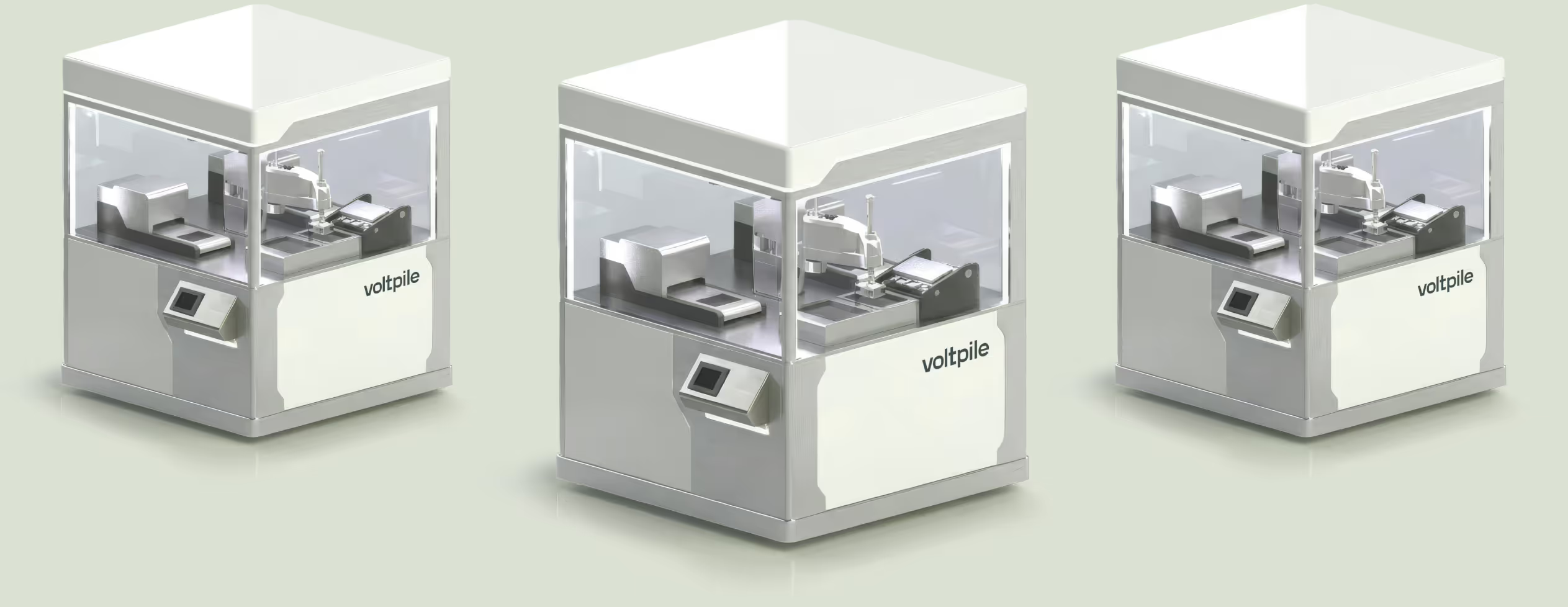
Voltpile’s manufacturing process is much cleaner than traditional batteries and it doesn’t release volatile toxic chemicals into the atmosphere.
Our modular, compact and self-contained manufacturing platform is designed as a turnkey solution that greatly simplifies deployment and fabrication. This saves energy and factory floor space.
Once our batteries eventually reach their end of life, our recycling and reconditioning programme minimises waste generation.
[1] Typical lithium-ion refers to commercially deployed lithium-ion battery systems used in stationary and mobility applications. [2] Emissions per kWh reflect estimated cradle-to-gate manufacturing emissions. [3] Energy density values are volumetric and reported at the system level. [4] Average number of cycles and average lifespan are based on operation within a 20–80% state-of-charge window under controlled thermal conditions; operation outside this range reduces cycle life. [5] Recyclability and toxicity assessments consider primary active materials and electrolyte composition only.



We believe that electrification is essential to avert the climate crisis, but only if a paradigm shift in battery technology can be achieved.
Our bipolar architecture solid state technology is set to drastically reduce battery waste, production emissions and environmental contamination.
Solving the climate crisis is a team sport and we’re always on the lookout for partners that share our values to help achieve this goal.
We’re always on the lookout for strategic partners that can help us build the future of battery technology.
